
The Psychology of Wearing a Brand Before Everyone Knows It

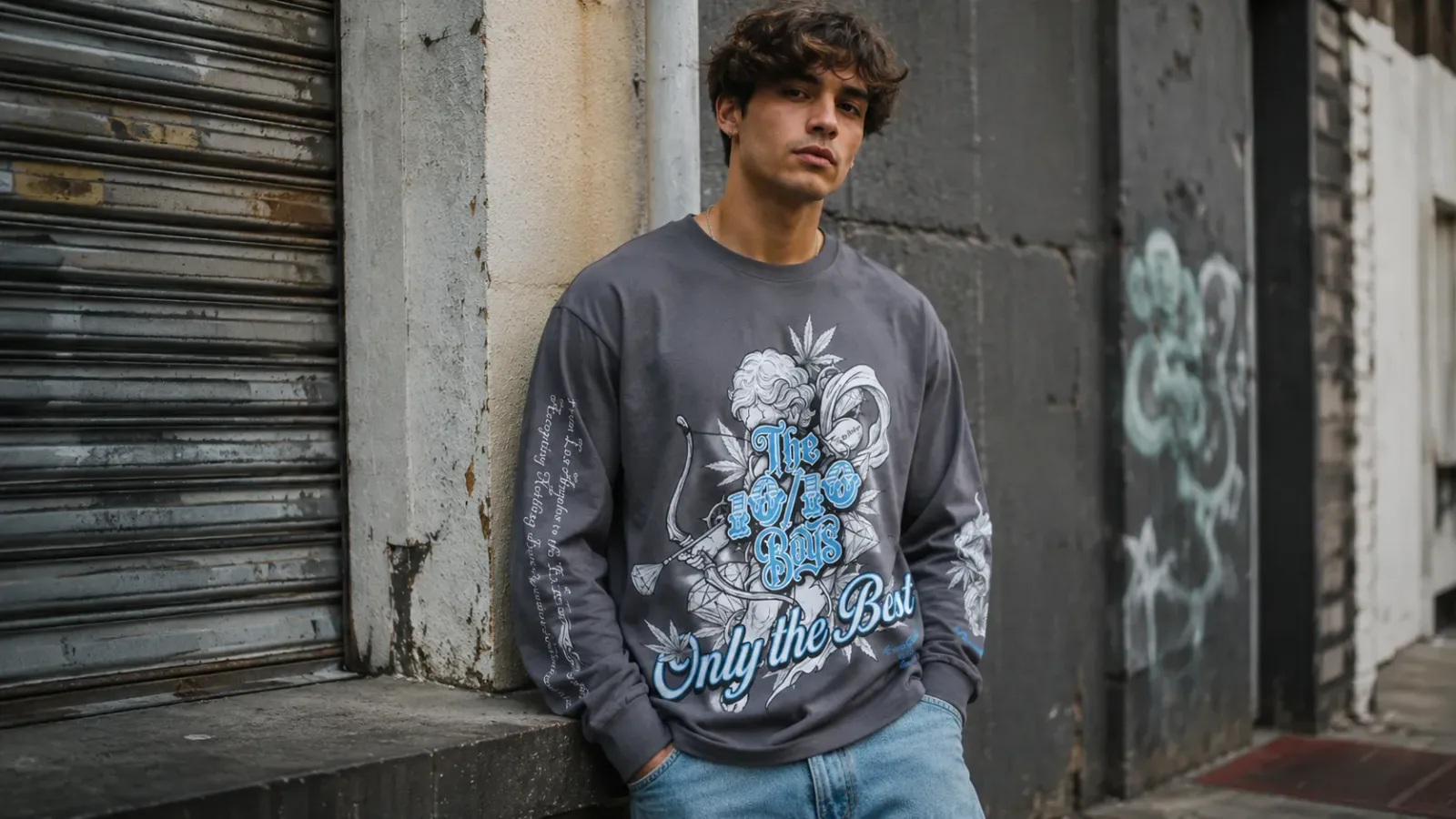
Wearing an underground streetwear brand before everyone knows it can feel different because of how the relationship starts. You found it. Nobody handed it to you through an advert or a window display in every city centre. The piece arrives attached to a moment, a place or a person, and for a lot of people that context stays in the garment long after the label grows.
This is not about being early for its own sake, or about looking down on anyone who arrived later. It is about what happens when clothing connects to personal taste before it connects to public approval, and why that order seems to matter to people who take streetwear seriously.
What Is an Underground Streetwear Brand?
An underground streetwear brand is an independent or emerging label that builds its identity outside mainstream trend cycles, growing through a smaller community, a recognisable aesthetic and a specific cultural connection rather than mass marketing. The scale is different, and so is the way people find out about it.
Underground does not mean unknown, unavailable or better. A brand can be widely respected inside one scene and completely unfamiliar outside it. The word describes a phase, a scale and a cultural position rather than a quality rating. Some independent labels stay deliberately small; others grow steadily and stop being underground without changing how the clothes are made.
Discovery Feels More Personal Than Recommendation
People meet a brand in roughly three ways, and they do not land the same. The first is curiosity: you notice a graphic on someone in a queue, or read a tag and go looking. Nothing pointed you there, so the find feels like yours. The second is proximity, meeting a label at an event, inside a niche scene, or through a friend whose taste you trust. It comes recommended, but it arrives in a context you already care about.
The third is repetition. You see something often enough, across ads and feeds and enough people, that recognition happens without any decision on your part. That route can still lead to a piece you love, but the relationship begins with familiarity rather than discovery.
Independent discovery tends to feel more personal because you carry some responsibility for it. You made a judgement nobody had validated for you, which is why the clothing can feel closer to your own taste than to a trend you joined.
Wearing It Early Becomes Part of the Story
Clothes hold time better than most objects. A tee bought early in a brand’s life can mark a period rather than a season: the year you started going to certain events, the first design that made you look twice, the point where a project you had been watching started to move.
That is why early pieces often stay in rotation long past their trend window. The graphic may be from a first run, the fit slightly different from the current cut, and neither reads as a flaw once the piece has been absorbed into a personal timeline. Graphic streetwear T-shirts carry this weight particularly well, because a print is specific in a way a plain garment is not.
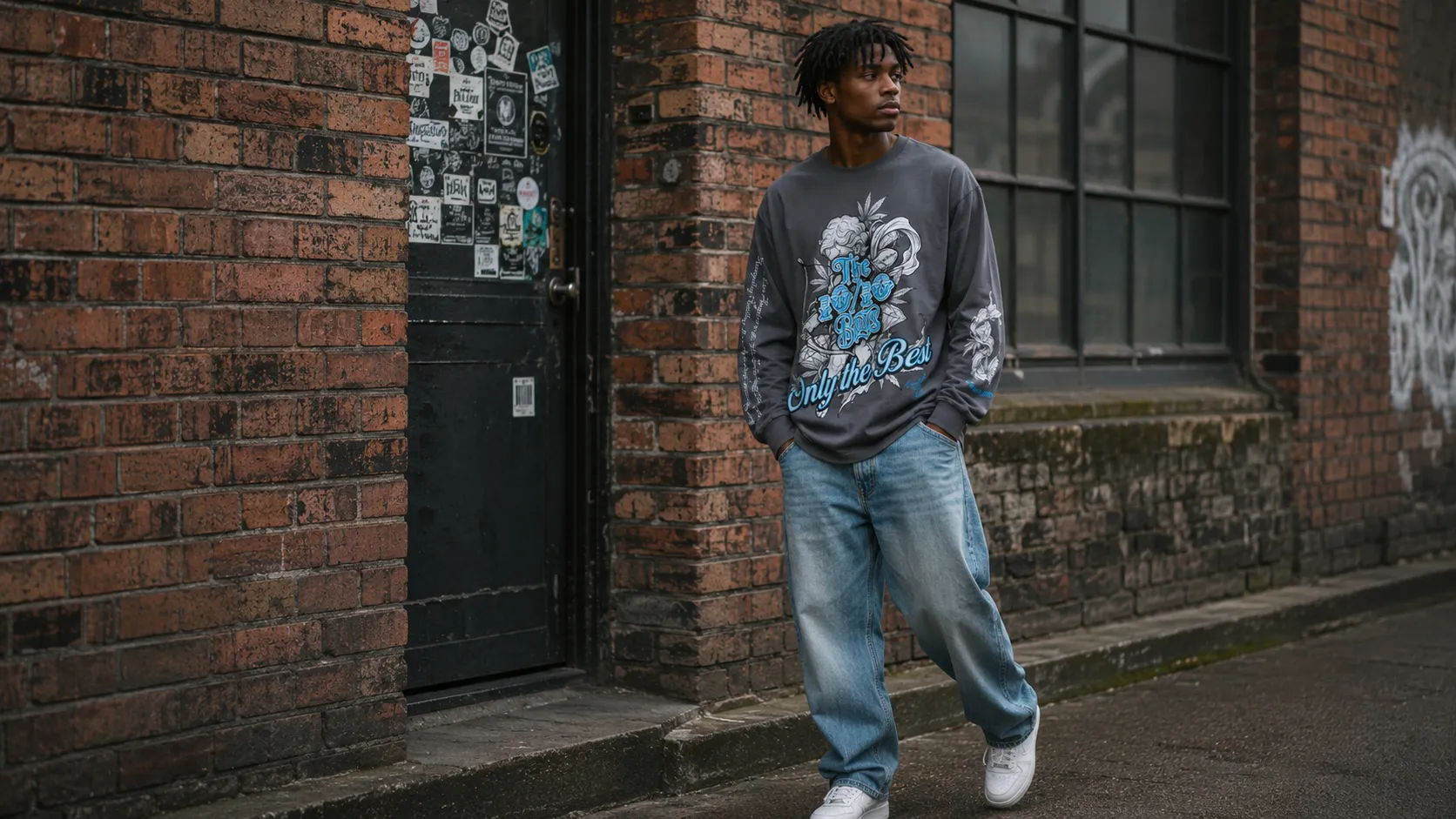
Watching something grow adds another layer. Following a small label for a few years means you remember what changed and what stayed, which turns a purchase into participation rather than a transaction.
Taste Before Validation
Choosing a brand before mass validation means deciding with less information and more instinct. There is no consensus yet, so you cannot check whether the piece already reads as correct. All you have is whether you like it.
Buying because something matches your taste and buying because it has already been approved are two different processes, and neither is morally superior. Most people do both, often in the same wardrobe. The difference shows up in what survives: pieces chosen on preference tend to stay in rotation once the conversation moves on, while pieces chosen because everyone had one fall out at the speed they arrived.
The same applies to self-expression rather than spending. Building a look around a preference produces something repeatable; building it around a trend produces something with an expiry date. Independent labels sit naturally in the first category, and independent streetwear pieces tend to be bought one at a time rather than as a complete look.
Recognition Without Mass Attention
Before a graphic is recognised by the public, it is recognised by a much smaller group. That gap is where a lot of the cultural value of an emerging streetwear brand sits.
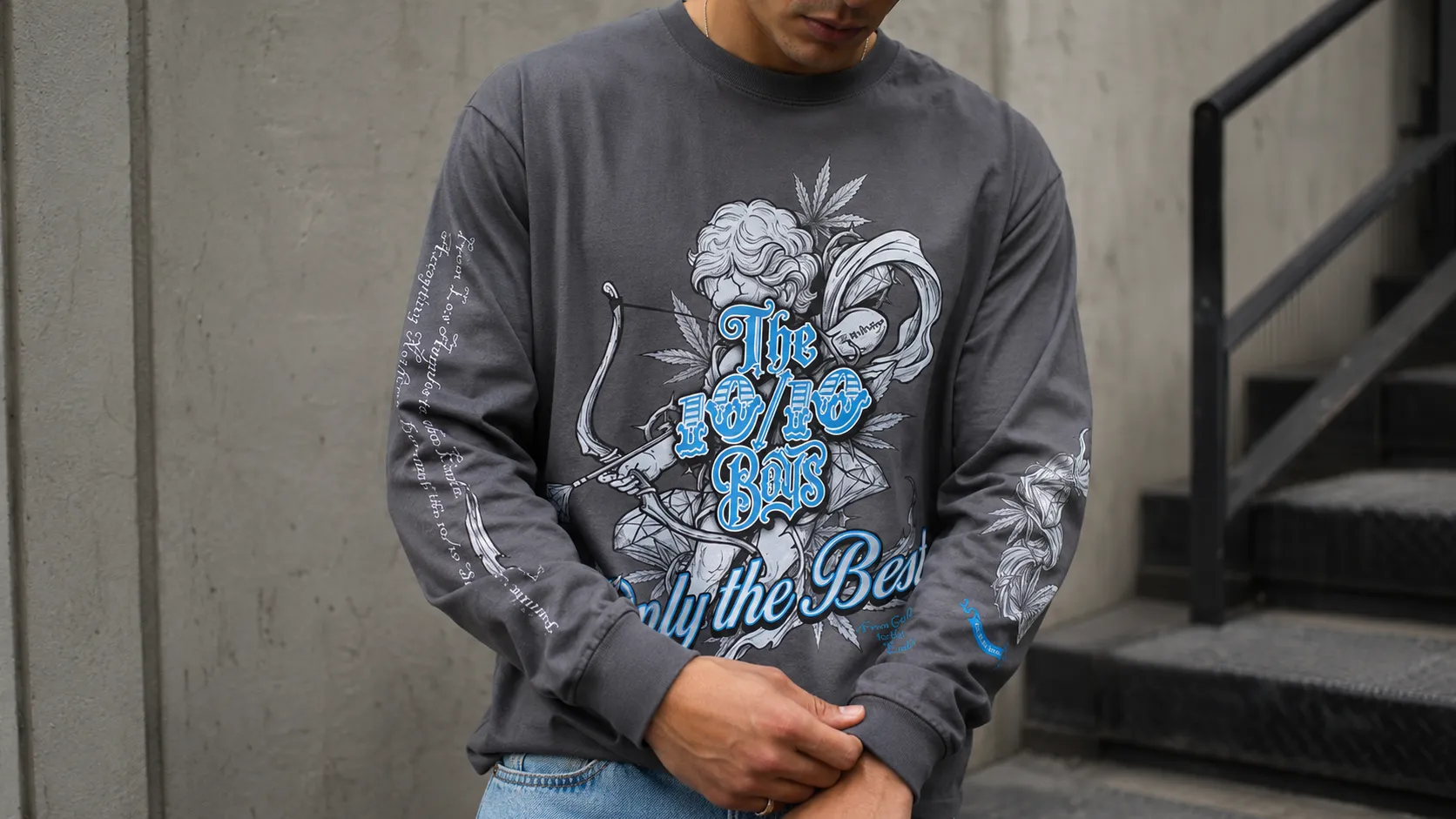
A logo, a silhouette or a specific print can work as a shared reference. Most people in a room read it as decoration. A few read it as a signal, and those few tend to have overlapping interests: the same events, the same music, a similar sense of what a good piece looks like. Conversations start that way more often than people expect, which is a large part of what a fit signals before you speak.
The 10/10 Boys operates in that territory. The name works as a standard rather than a slogan, and the meaning behind the name is what someone recognises across a venue. Recognition of that kind does not require scale, only a reference specific enough to mean something to the people who hold it.
Authenticity Is More Than Being First
Being early does not make anyone more authentic. Someone who bought a first-run piece and never wore it again has a weaker relationship with a brand than someone who found it three years later and has worn it every week since.
What holds up is coherence. Whether the aesthetic matches how you dress. Whether you care what the brand stands for beyond the graphic. Whether you would still reach for the piece if the label disappeared tomorrow and nobody recognised it. Those questions say more than a purchase date, which is the same reason authenticity matters more than hype across streetwear generally.
Timing is context, not credential. It can explain how you found something. It cannot explain why you kept it.
What Happens When an Underground Brand Grows?
Growth changes the relationship, and reactions split. Some early adopters feel a quiet pride watching a project they backed reach a wider audience. Others worry the identity that attracted them will thin out as the community expands and the references become common.
Both reactions make sense, and neither is a reason to treat growth as failure. A brand that reaches more people is not automatically a worse brand. What matters is whether the direction stays recognisable: the same design language, the same standards, the same reasons the clothing appealed in the first place. Labels that keep those consistent tend to hold their original community while adding to it, which usually shows in the story behind the brand rather than in audience size.
Older pieces often gain something in the process. Not necessarily resale value, and there is no reason to buy on that assumption, but a personal weight that comes from having been there for an earlier version of the project.
Finding an Independent Brand That Actually Fits You
Picking a label worth following is less about hunting for obscurity and more about a few practical checks. Obscure and good are not the same category.
- Visual consistency. Whether the design language holds across a full range or shifts with whatever is currently popular.
- Quality and construction. Weight, stitching, print durability and how a piece holds shape after a few washes say more than any campaign.
- Story and values. A brand with a real starting point usually explains it, so it is worth reading what shapes The 10/10 Boys or any independent label before committing.
- Community and communication. Who wears it, and whether the brand speaks with a clear idea of itself.
- Official channels. Smaller brands attract imitations as they grow, so you can verify an official product when you want certainty about what you have.
- Fit with your wardrobe. The most useful test is simple: does this work with what you already own and wear?
That last point decides more than the rest combined. A brand you admire from a distance and a brand you actually wear are two different things.
FAQs About Underground Streetwear Brands
What is an underground streetwear brand?
An underground streetwear brand is an independent or emerging label that develops its identity outside mainstream trend cycles, growing through a smaller community, a recognisable aesthetic and a specific cultural connection rather than mass marketing. Underground refers to scale and cultural position, not to quality.
Why do people like discovering streetwear brands early?
Discovering a brand yourself can make the clothing feel connected to personal taste rather than public approval. The piece also tends to carry the memory of how and when you found it, which for some people creates a stronger attachment than a purchase made after mass exposure.
Does wearing an independent brand make your style more authentic?
Not by itself. Authenticity depends more on whether the aesthetic matches how you dress, whether you care what the brand represents, and whether you keep wearing the pieces once attention moves elsewhere. Timing explains how you found a brand, not why you stayed.
What happens when an underground streetwear brand becomes popular?
The community widens and the references become more common. Some early supporters feel proud; others worry the original identity will fade. A brand can grow without losing that identity if its design language, standards and direction stay recognisable.
How can you find authentic independent streetwear brands?
Look for visual consistency across collections, real garment quality, a clear story and values, a genuine community, and official channels you can check. Then apply the practical test: whether the clothing works with what you already wear.
Find Yours Early
Finding a brand early is not only about being first. It is about recognising a visual identity, an attitude and a community that already feel relevant to you, then choosing pieces you will still be reaching for when the conversation has moved somewhere else.