
Streetwear as a Signal: What Your Fit Says Before You Speak

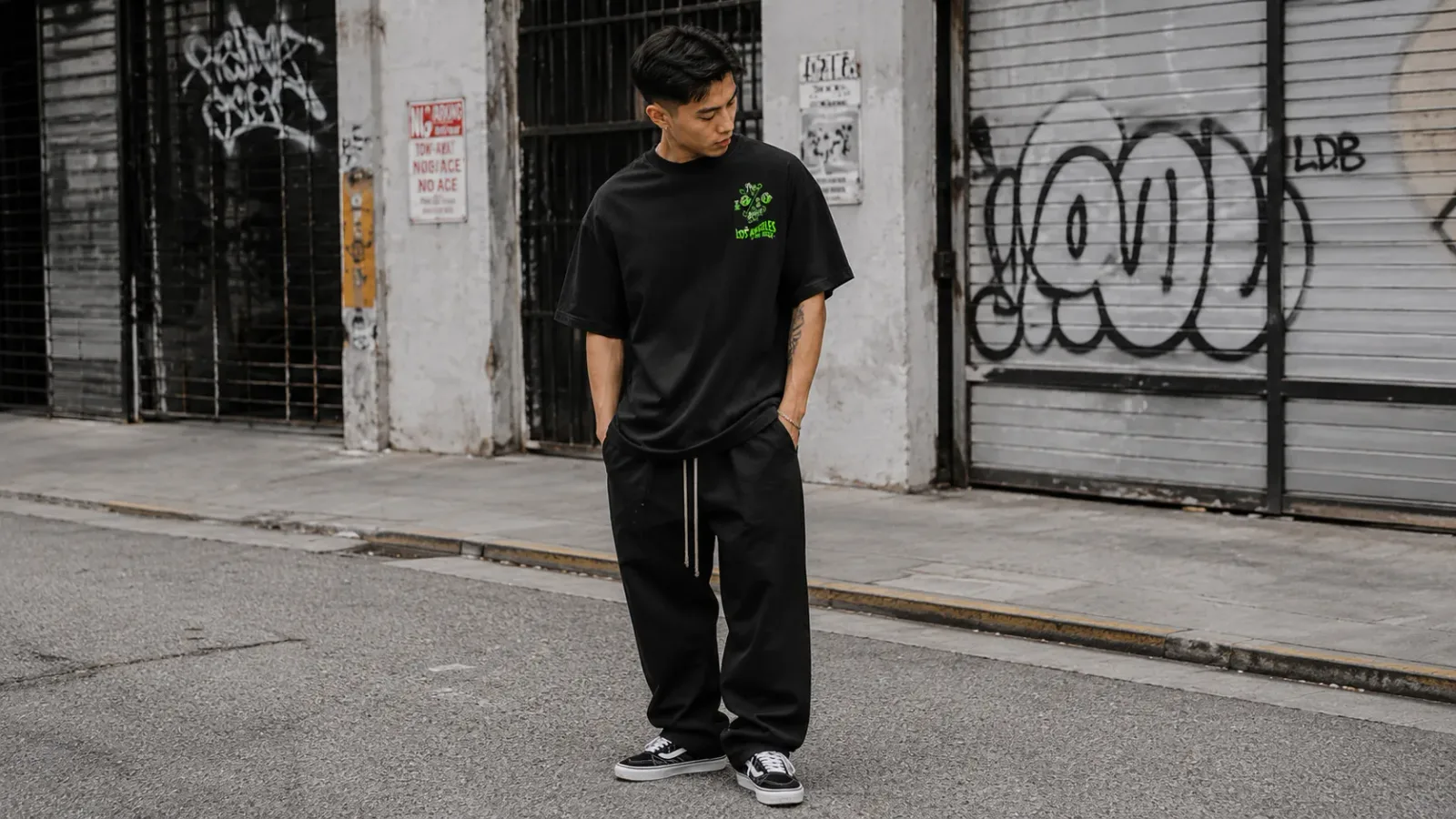
Streetwear identity is the part of you that lands before you say anything. A silhouette, a colour, a graphic sitting where a chest pocket would be: people read those signals fast, and they read them before a conversation starts. A fit can suggest what you listen to, where you spend your weekends, which references you recognise and how much you care about the details.
None of it is accidental. Every time you get dressed you make small decisions about width, length, colour and how visible a logo should be, and each one narrows the message. This is not a guide to putting an outfit together. It is about what those decisions communicate, and how to make them say something that is actually yours.
What Does Streetwear Identity Mean?
Streetwear identity is the visual language a person builds through clothing, using silhouette, colour, branding and repetition to signal their cultural references, taste and sense of belonging without having to explain any of it. It is personal style working as shorthand.
The line between identity and trend-following sits in the timeline. A trend is borrowed for a season and dropped when the algorithm moves on. An identity survives that cycle because it was never built on timing. Someone with a real streetwear identity stays recognisable across three different years and three different outfits, because the underlying choices hold even when the pieces change. Clothing as identity is less about owning rare items and more about a repeatable set of decisions that reads the same way every time.
Your Silhouette Sets the Tone
Silhouette is the first thing anyone processes, usually from a distance and often before colour registers. It is the outline of the fit, and it carries more of the message than most people expect.
An oversized cut tends to read as relaxed and culturally fluent. It has roots in skate, hip-hop and the kind of underground streetwear culture where comfort and presence mattered more than tailoring, and it still signals ease rather than effort. A relaxed fit sits closer to the body without gripping it, which often suggests shape without formality. A fitted cut can read as sharper and more deliberate. A structured piece with a defined shoulder or a heavier fabric usually reads as intentional, closer to design than to comfort.
None of these are better or worse. They are different sentences. Where it goes wrong is when the proportions fight each other, because a fit that has not been thought through communicates exactly that. Streetwear hoodies change the reading again, since volume in the upper body shifts the balance of the whole look and needs the bottom half to answer it.
Colour Communicates Before Logos Do
Colour is the second signal, and it moves faster than any graphic.
Black is the most common choice in streetwear for a reason. It removes noise, holds shape visually and lets the cut and the fabric do the talking. Wearing black head to toe can suggest restraint and confidence, someone comfortable being read slowly rather than immediately. Grey does something quieter. It softens the whole outfit and often reads as everyday and unbothered, which is why it works so well as a base under a stronger piece.
Brighter colour changes the intent. A single pink, green or off-white element in an otherwise dark fit is a decision people notice, and it usually reads as energy or willingness to be seen. Running that colour across the whole look says something closer to statement than accent.
These are patterns, not rules. Colour meaning shifts between scenes, cities and seasons, and the same black hoodie can read as low-key in one room and severe in another. What stays true is that colour is a choice, and choices communicate.
Loud Logos, Quiet Signals and Cultural Recognition
Branding operates on two levels, and they do very different jobs.
A loud logo across the chest broadcasts. It is legible to everyone, including people outside the culture, and it tends to say something about affiliation in the most direct way available. A quiet signal works differently. A small chest mark, a specific graphic treatment, a particular cut or a colourway that only means something inside a certain community will pass most people completely and land hard with the few who recognise it.
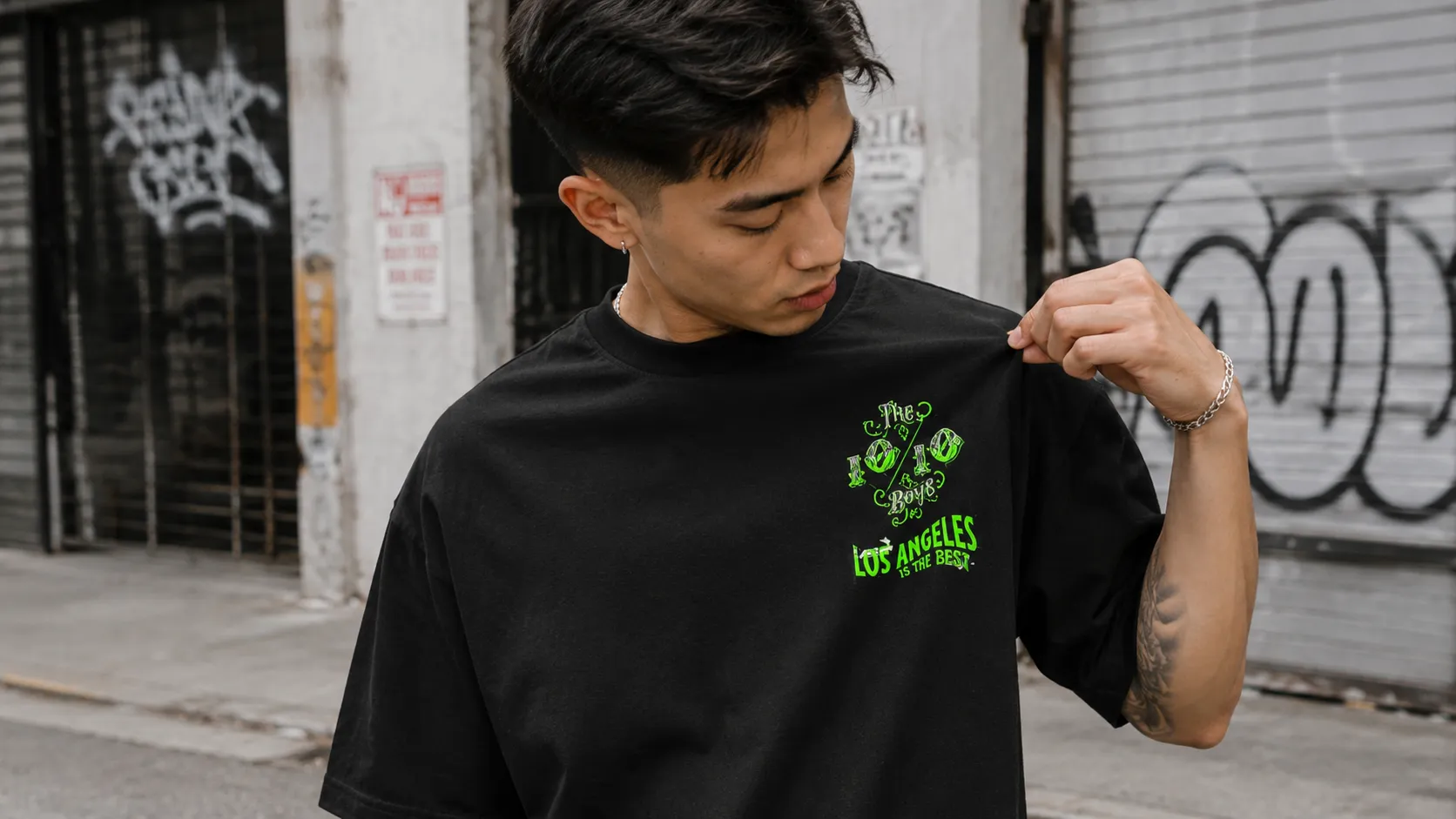
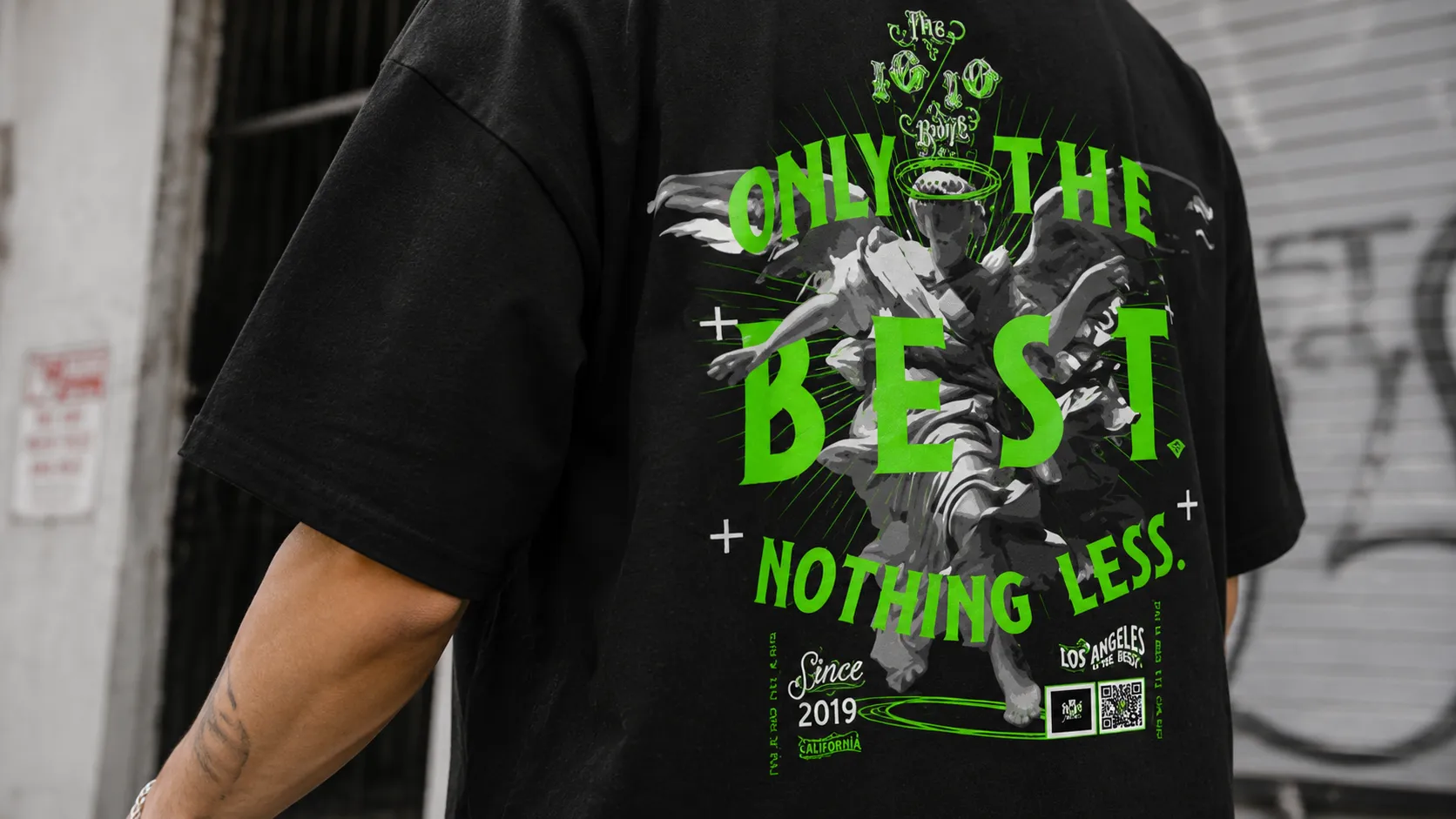
That second category is where most cultural recognition happens: the nod between two people who own the same piece, the glance at a graphic that references a scene rather than a season. Graphic streetwear T-shirts carry a lot of this weight because the print sits at eye level and works without a caption, and caps and headwear do the same from a distance. The choice between loud and quiet is not about confidence. It is about who you are talking to.
The Communities Behind the Clothes
Streetwear has never been separate from the scenes that shaped it. Music, skate, nightlife and event culture all fed into it, and the clothing still carries traces of where it came from. That is why a fit can work as an opening line at a show, at a skate spot or on a trade show floor.
Independent brands sit at the centre of this. A large label signals reach. A smaller one, built around a specific standard and a specific community, signals something more particular: that the wearer knows what it is and chose it anyway. That is how a brand becomes a community signal rather than a purchase.
The 10/10 Boys works that way. The name is a standard before it is a label, and the meaning behind The 10/10 Boys is what the pieces carry into a room. Someone who spots the graphic across a venue already has a rough idea of what the other person values, which is exactly what a community signal is supposed to do.
Dressing for Approval vs Dressing With Identity
There is a real difference between copying a look and building one.
Dressing for approval means the reference point is external. The fit is assembled from whatever is currently visible, it gets replaced when the feed changes, and it tends to look correct without looking like anyone in particular. Most people pass through that stage. It just does not accumulate into anything.
Dressing with identity means the reference point is internal. You know which shapes work on your frame, which colours you return to and which pieces you actually reach for. The result may still overlap with what is popular, but the overlap is a coincidence rather than the strategy.
The practical test is repetition. If you would still wear the same fit in eighteen months, it is probably yours. If it only made sense during a specific month, it was borrowed.
How to Build a Streetwear Identity That Feels Like You
Building a personal style is mostly a process of narrowing down rather than adding on. Start with silhouette, because it is the decision everything else sits on top of. Work out whether you read better oversized, relaxed or closer to the body, then keep that consistent across seasons instead of switching by piece. Next, settle on a base palette you actually wear rather than one you admire. Most strong personal styles run on two or three colours with one accent.
From there, a few things tend to separate a real identity from a rotating wardrobe:
- Repeat deliberately. Wearing the same tee or hoodie regularly builds recognition. Uniforms are a choice, not a shortage.
- Fit before hype. A piece that sits correctly on you will always read better than a piece that is simply desirable.
- Choose brands you would defend. If you cannot say why a label is on your chest, it is decoration rather than a signal.
- Leave room for comfort. Confidence is visible, and it is very hard to fake in something you are constantly adjusting.
Once those settle, the shopping gets simpler. You stop buying to fill gaps and start buying to reinforce a look you already have. If you want a starting point, explore the current collection and pay attention to which cuts you keep coming back to.
FAQs About Streetwear Identity
What is streetwear identity?
Streetwear identity is the way someone communicates taste, cultural references and belonging through clothing, mainly through silhouette, colour, branding and the pieces they repeat. It is style used as a signal rather than as decoration.
How does streetwear express personality?
It expresses personality through consistent choices. The cuts you favour, the colours you return to and whether you prefer visible logos or quieter details all build a pattern, and that pattern is what other people read.
Does oversized clothing change how an outfit is perceived?
It usually does. An oversized silhouette often reads as relaxed and culturally aware, while a fitted cut can read as sharper. Perception depends on proportion, since an oversized piece works best when the rest of the fit is balanced against it.
Can a brand become part of someone’s identity?
Yes, particularly with independent brands. When a label stands for a specific standard or community, wearing it signals alignment with that standard, and other people who know the reference will recognise it immediately.
How do you develop a personal streetwear style?
Settle on a silhouette that suits your frame, narrow your palette to a few colours you genuinely wear, repeat your strongest pieces instead of constantly rotating, and choose brands you can actually explain. Consistency does more for personal style than variety.
Say It Before You Speak
Your clothes do not need to explain everything about you, but they can communicate what you value before you open your mouth. The tees, hoodies and headwear in The 10/10 Boys collection are built to sit inside a look you already own rather than replace it.