
How to Layer Hoodies and Tees Without Losing Shape


A good hoodie and t-shirt outfit can look effortless or accidental, and the difference usually comes down to a few centimetres. Get the length, fit and proportion right and the layers sit clean; get them wrong and the whole look slumps at the hem. This guide breaks down how to layer a hoodie over a tee so the shape holds — starting with the t-shirt underneath, moving up to the hoodie on top, and covering the small mistakes that flatten a fit along the way.
Why proportion matters in a hoodie and t-shirt outfit
Layering is really an exercise in proportion. Put a hoodie over a tee and you create two horizontal lines across your body — the hem of the hoodie and the hem of the tee underneath. If those lines fight each other, the eye reads the outfit as messy even when every piece is good quality; when they work together, the look feels considered.
The aim is a clean stack with enough contrast in length to look intentional, but not so much that the tee turns into an accidental skirt. It is the same thinking behind any premium streetwear look built on fit, fabric and proportion — layering is just that idea applied to two pieces.
Start with the right t-shirt fit
The tee is the base layer, so it sets up everything on top. Too long and it peeks out below the hoodie in a way that looks unplanned; too boxy and it adds bulk that breaks the hoodie’s line. For clean layering, look for a tee with:
- A hem that finishes around mid-zip of your trousers — long enough to show a sliver under the hoodie, short enough to stay tidy.
- A shoulder seam that sits close to your actual shoulder, so the neckline frames you rather than sliding around.
- A mid-weight fabric that holds a straight line instead of clinging.
If you already wear our everyday tees, you have most of this handled — they are cut to layer rather than billow, which is exactly what you want under a hoodie.
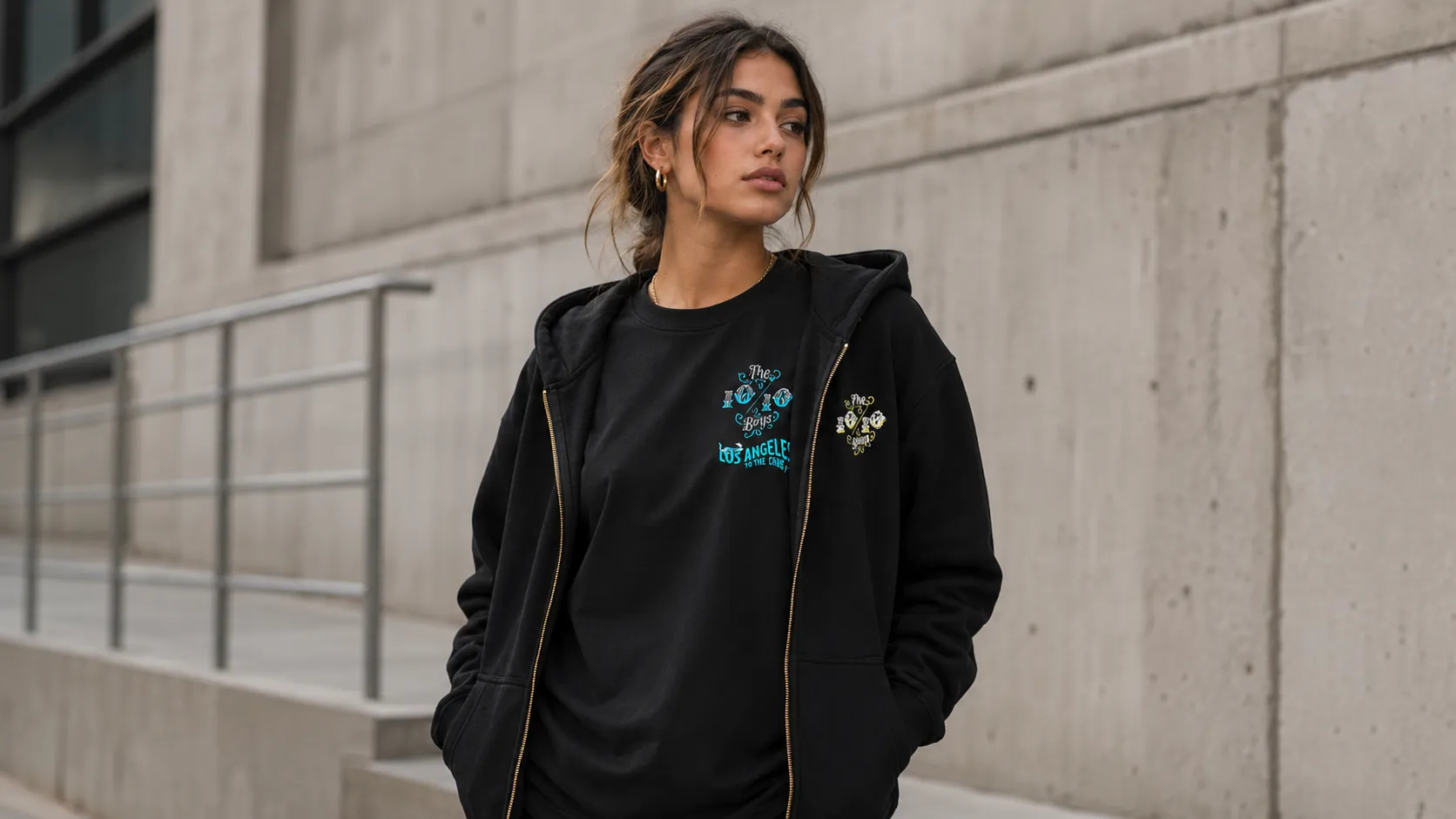
Choose a hoodie that keeps its shape
A hoodie carries the whole look, so its structure matters more than any other piece. You want it close enough through the shoulders to look deliberate, with enough room in the body to layer a tee underneath without straining. The fabric should have weight — a heavyweight loopback or brushed-back cotton holds its silhouette and resists the slumping that makes a fit look tired. Two details to check first:
- The shoulder seam. It should land near the edge of your shoulder, not halfway down your arm, unless you are deliberately going oversized.
- The hem and cuffs. Ribbing that has kept its stretch is what holds the shape; once it goes slack, the hoodie pools around the waist.
This is where build quality earns its place. Our heavyweight hoodies are made to keep their structure through real wear, which is the whole point of layering with one.
How much of the t-shirt should show under a hoodie?
This is the detail that makes or breaks the look. As a rule, you want roughly two to five centimetres of tee showing below the hoodie hem — enough to register as a deliberate second layer, not so much that it dominates:
- Nothing showing: reads as a single layer; fine, but you lose the point of layering.
- 2–5 cm showing: the sweet spot — clean contrast, balanced lines.
- 8 cm or more: starts to look like the tee is doing the work the trousers should; the proportions tip.
The same logic applies at the collar — a thin band of tee adds depth, a full collar stacked above the hood looks crowded.
Oversized vs regular fit: what works best?
Both work — the trick is not doubling up on volume. Streetwear proportion usually means contrast: one relaxed piece balanced by something cleaner.
Oversized hoodie, regular tee
The most reliable combination. A roomy hoodie over a fitted tee gives you the relaxed silhouette without the layers swallowing each other. Keep the trousers tapered or straight so the volume stays up top.
Regular hoodie, oversized tee
This works when the tee is long and you want a slice of it under a neater hoodie. It is more of a styling move and depends on the tee sitting flat. If you like the longer-tee look on its own, our guide to styling oversized t-shirts for a clean fit goes deeper.
Oversized on oversized
The hardest to pull off. Two loose layers usually read as bulky rather than relaxed. If you try it, let the hoodie be the bigger piece and keep the tee only slightly long.
Sizing is rarely consistent across brands, so it pays to check how each piece is actually cut before you size up or down — our sizing guide for how each piece fits takes the guesswork out of that.
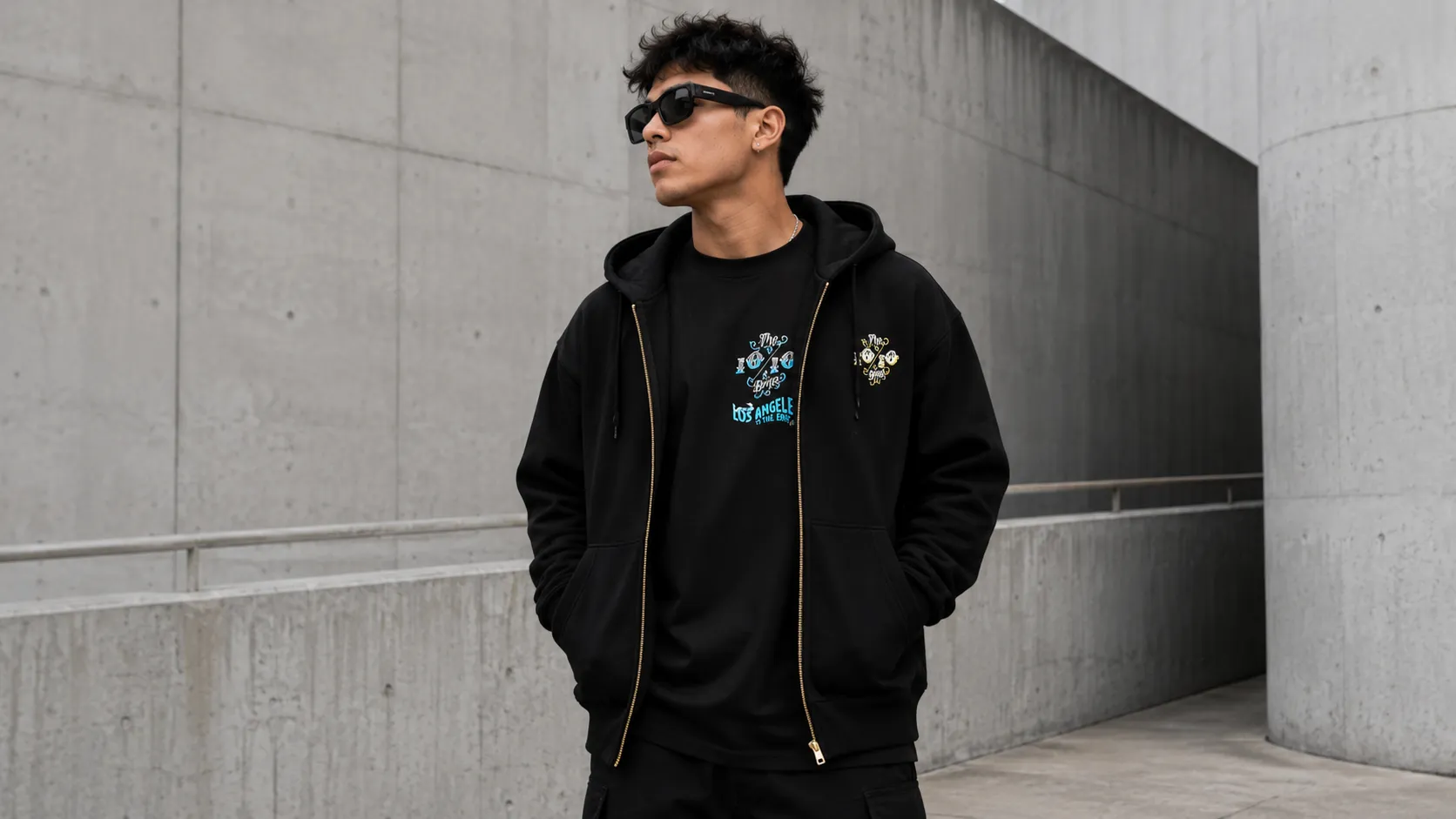
Common hoodie layering mistakes
- A tee longer than the hoodie. The base layer should never outrun the top layer — it flips the proportions.
- Bunching at the waist. Usually a hoodie that is too long or ribbing that has gone soft.
- Matching every length. Identical hems flatten the look — you want gentle steps, not one solid block.
- Heavy on heavy. A thick tee under a thick hoodie kills the shape; keep the base layer lighter.
- Ignoring the trousers. Layering is full-body proportion — baggy over baggy loses all definition.
Clean hoodie and t-shirt outfit ideas
A few combinations that hold their shape on repeat:
- All-black stack: black tee, black heavyweight hoodie, tapered black trousers — a thin line of tee at the hem keeps it from going flat.
- Tonal grey: light grey tee under a charcoal hoodie for quiet contrast.
- Hood down, sleeves pushed: a small adjustment that defines the wrists and stops the hoodie reading as shapeless.
- Zip-through over a tee: leave it open for a vertical line that lengthens the whole fit.
How to protect the shape of your hoodie over time
A layered fit only stays clean if the hoodie keeps its shape, and most of that is decided in the wash. Heat and overloading stretch cuffs, slacken hems and fade heavyweight cotton — the exact things that make a hoodie pool at the waist. Wash cold, turn it inside out, skip the tumble dryer where you can, and reshape the cuffs while it is damp. The full routine is in our breakdown of washing a premium hoodie without losing its shape.
Build a clean layered streetwear fit with The 10/10 Boys
Good layering is not about owning more pieces — it is about getting the fit, length and proportion of the ones you wear right. Nail the tee underneath, choose a hoodie that holds its structure, leave a clean line of tee at the hem, and keep it balanced from shoulder to trouser. Do that and a simple hoodie and t-shirt outfit reads as considered every time.
Explore premium hoodies and everyday t-shirts from The 10/10 Boys to build a clean layered streetwear fit that keeps its shape.
FAQs
What is the best t-shirt length to wear under a hoodie?
Aim for a tee that finishes around the mid-zip of your trousers, leaving roughly two to five centimetres showing below the hoodie hem — a clean second layer without the tee taking over the proportions.
Should a hoodie be tight or loose for layering?
Neither extreme. Close through the shoulders for structure, roomy enough in the body to fit a tee underneath without pulling. A heavyweight fabric helps it hold that shape through the day.
Can you wear an oversized hoodie with an oversized tee?
You can, but it is the hardest combination to balance — two loose layers tend to look bulky. Let the hoodie be the larger piece, keep the tee only slightly long, and taper the trousers to hold the line.
How do I stop my hoodie losing its shape?
Most shape loss happens in the wash. Wash cold, turn it inside out, avoid the tumble dryer, and reshape the cuffs and hem while damp so the ribbing keeps its stretch.