
Why Black Streetwear Still Feels Premium When the Details Are Right

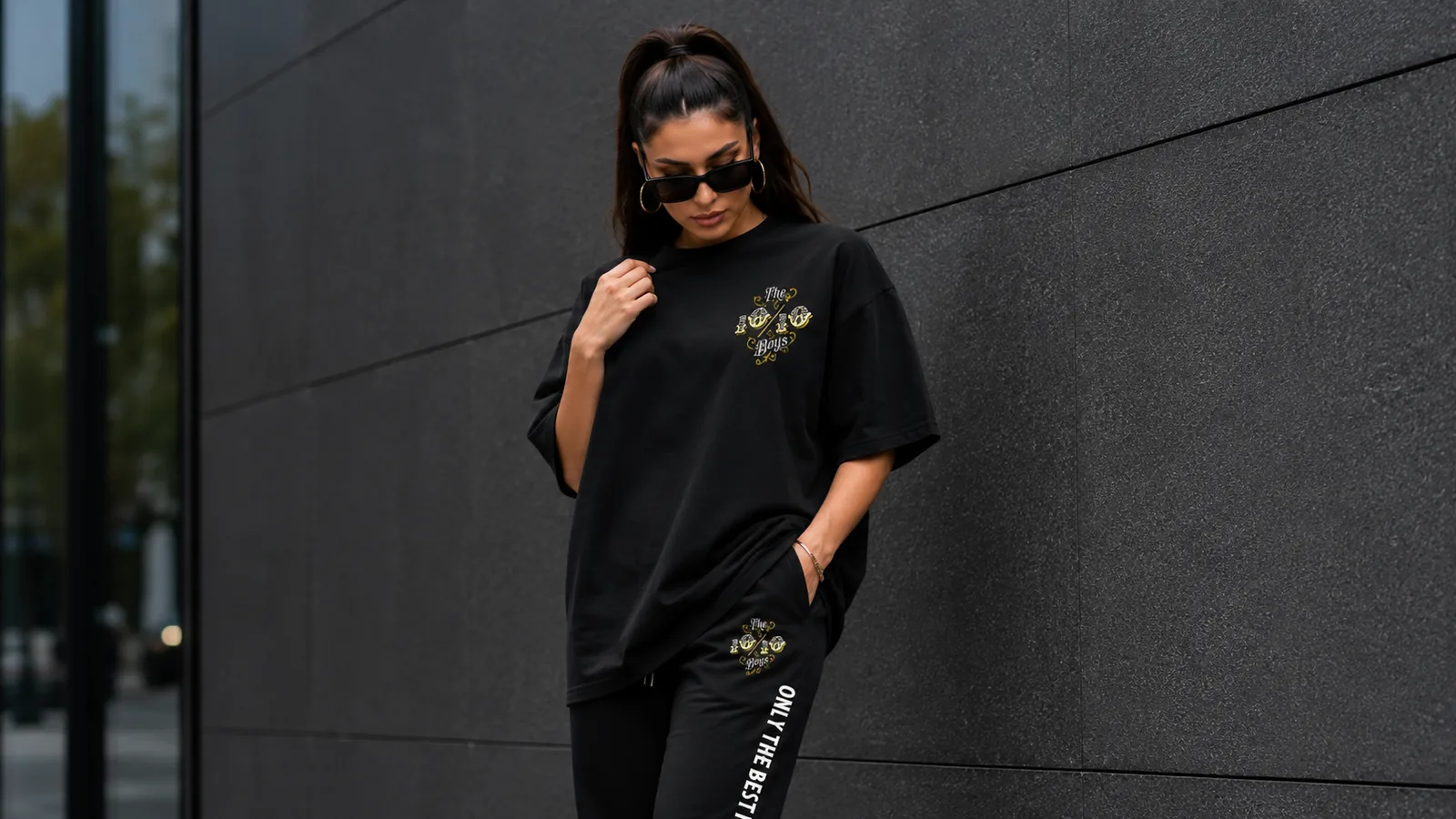
Black streetwear can feel expensive or completely forgettable, and the garment decides which long before the colour does. A black tee with a thin body and a collapsing collar reads as cheap from across the room. One cut with weight, sitting square on the shoulder and finished cleanly at the hem, reads as considered. Same colour, opposite result. The difference sits in fabric, fit, construction and finishing.
Why Does Black Streetwear Feel Premium?
Black streetwear feels premium when black is treated as a surface rather than a shortcut. Removing colour contrast also removes the easiest thing for the eye to settle on, so attention moves to everything else: silhouette, texture, the proportion between shoulder and hem, the line of a seam, the placement of a graphic, the way a cuff finishes.
That cuts both ways. On a well-built piece, black works like a clean background and every good decision becomes more legible. On a weak one, it offers nowhere to hide: a flat, slightly grey body with a wavy hem and an off-centre print looks worse in black than it would in a busy colour.
Fabric Weight Changes the Entire Garment
Weight is usually the first thing separating two black garments that look identical on a screen. Denser cotton has more body, so it falls away from the chest instead of clinging and holds a defined line at sleeve and hem. Lighter fabric moves more, creases faster and follows whatever is underneath.
It also changes how a piece ages. Fabric with structure keeps its silhouette through repeated washing, while a thin knit twists and stretches at the neckline within weeks. That does not make heavy fabric automatically correct: a winter hoodie and a warm-weather tee solve different problems. For more on how fabric, fit and durability connect, the The 10/10 Boys quality guide breaks those standards down.
A Deep Black Depends on More Than Colour
A convincing black comes from dye consistency and fabric surface working together, not from a colour name on a product page. Where the dye has penetrated evenly, the whole garment reads as one tone, including the seams, the collar band and the cuffs. Where it has not, patchiness shows first at the points taking the most stress.
Texture matters as much. A smooth, tight surface looks dense, while an uneven one scatters light and can look faded even when the dye is fine. Washed and faded black are not automatically faults, and a deliberate wash finish applied evenly looks intentional from day one. The problem is the accidental version: grey shoulders, sharper fading along folds, a body that has drifted while the ribbing has not. That is wear rather than design, and largely preventable if you know how to care for black streetwear.
Fit and Proportion Make Simplicity Look Intentional
A plain black garment has little to lean on, so proportion carries most of the design. Shoulder width decides whether the piece looks cut for a body or simply too big. Sleeve length decides where the arm visually ends, total length decides how the top sits against whatever you wear below it, and the collar decides whether the whole thing looks finished.
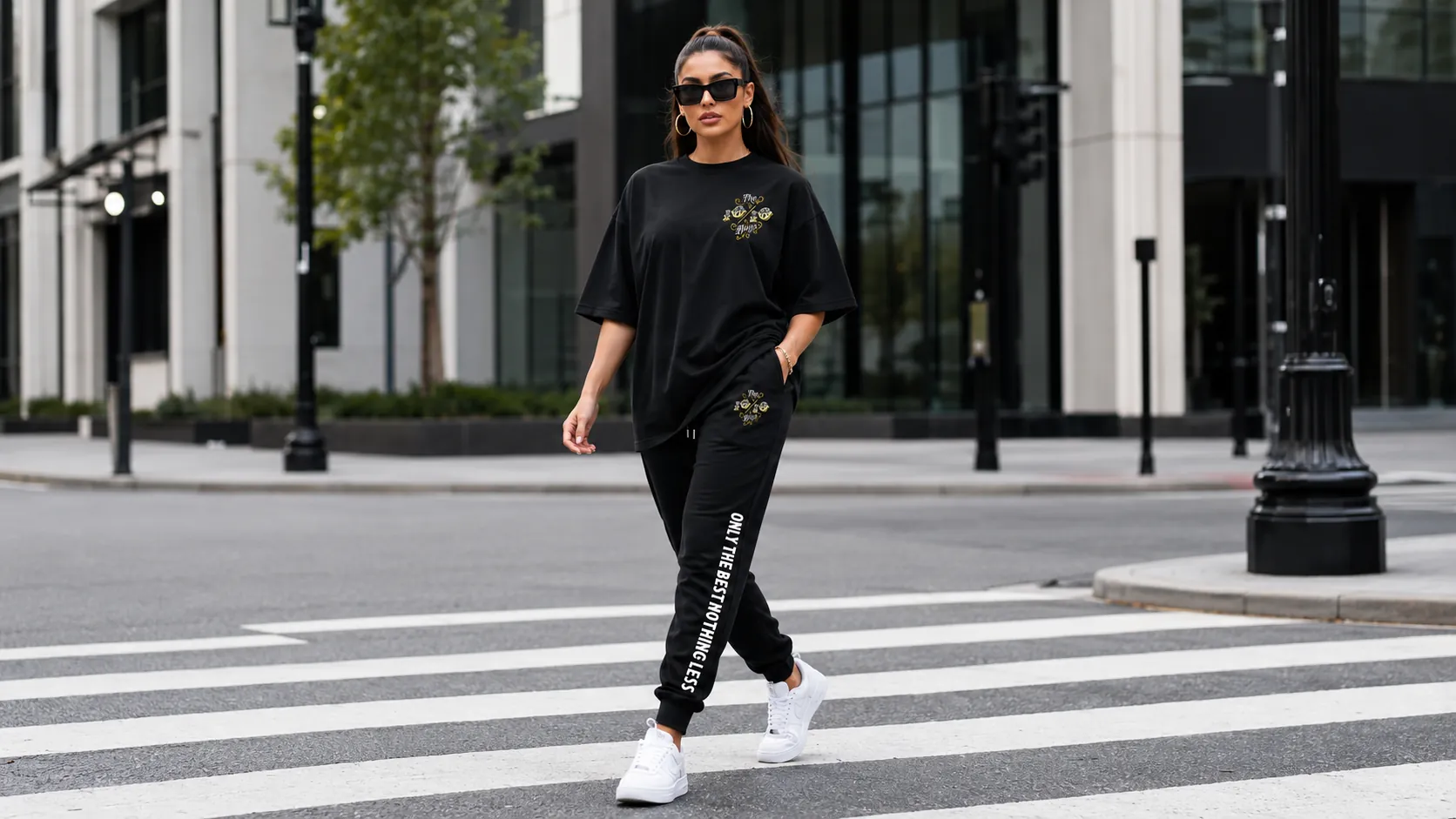
Oversized is a specific cut, not a size up. A properly oversized black tee has a dropped shoulder designed to fall where it does, a wider body that still tapers, and a length stopping at a deliberate point. Going two sizes above your own gives you a longer sleeve, a lower armhole and a gaping neckline instead. Volume in a hoodie holds only if the ribbing and hood support it. Balance is the other half, which is why oversized streetwear tees and tapered joggers keep reappearing together, and why the intended volume in black streetwear hoodies is a design decision rather than an accident of sizing.
The Small Construction Details People Notice
Most people cannot name what makes a garment look well made, but they register it immediately, and on black those details are harder to hide than on any printed fabric. The standards hold across tees, hoodies and joggers.
Stitching should run straight and at an even density, with no puckering where panels meet. Collars should return to shape after being pulled over the head, and cuffs and hems need enough structure to hold a line. Side seams should align, prints should sit symmetrically, and no loose threads should appear at the finishing points. Then there is movement, which no photograph shows: a well-made piece keeps its proportions when you raise your arms or sit down, while a weaker one twists at the seam and stays twisted.
Graphics Have Nowhere to Hide on Black
Black is the highest-contrast background a graphic can sit on, which makes it the most demanding. Every edge is sharper, every registration error more obvious, and softness in the print reads as a blur against a dense field. Artwork that survives on heather grey can look unfinished in black.
Scale and placement carry as much weight as the artwork. A small chest graphic has to sit correctly against the shoulder line and collar. A large print interacts with the whole silhouette and, on an oversized cut, has to account for the extra width and the way the fabric folds. Colour is the last variable, and restraint tends to win: one or two accent tones doing consistent work across a range. The 10/10 Boys is a useful example, because the graphics work as identity rather than decoration. The same visual language repeats at different scales, so a chest mark and a full side print read as coming from the same place — a consistency that runs through the current streetwear collection.
Premium Does Not Have to Mean Minimal
The idea that a garment only looks premium once the branding comes off confuses an aesthetic with a standard of execution. A blank black tee and one carrying a large graphic can both feel premium, and both can feel cheap. What separates them is coherence: the graphic belonging to the cut it sits on, accent colours relating to the rest of the range, proportions chosen deliberately, finishing that holds up close.
Why Black Pieces Become Wardrobe Standards
A well-built black tee or hoodie tends to become the piece you reach for without thinking. It sits with everything else in the rotation, so it needs no planning, and keeps a recognisable identity through its cut and graphic. Change the cap, the denim, the jewellery or the footwear and the same top reads differently, which is how premium black streetwear stays in rotation without feeling repetitive.
It travels between contexts too, adjusting through what you put around it. For worked examples, our guide to styling a dark streetwear look covers that side properly.
How to Judge Black Streetwear Before You Buy
Most of these standards can be checked before anything reaches you, as long as you work through the product page instead of judging a piece from one styled shot.
- Composition and weight: read what the listing states about material, and match it to how you plan to wear the piece.
- Close-up photography: look for detail shots of the collar, cuffs, hem and print. A listing with only distance shots is showing you less.
- Seams and finishing: zoom in and check that stitching runs evenly and panels line up.
- Proportion: decide whether the cut is genuinely oversized or simply larger, and compare it against something you own.
- Sizing: the The 10/10 Boys sizing guide explains the intended fit for each piece.
- Graphic quality: check sharpness, scale and position relative to the shoulder and collar.
- Care instructions: a brand that tells you how to protect a black finish expects the garment to last.
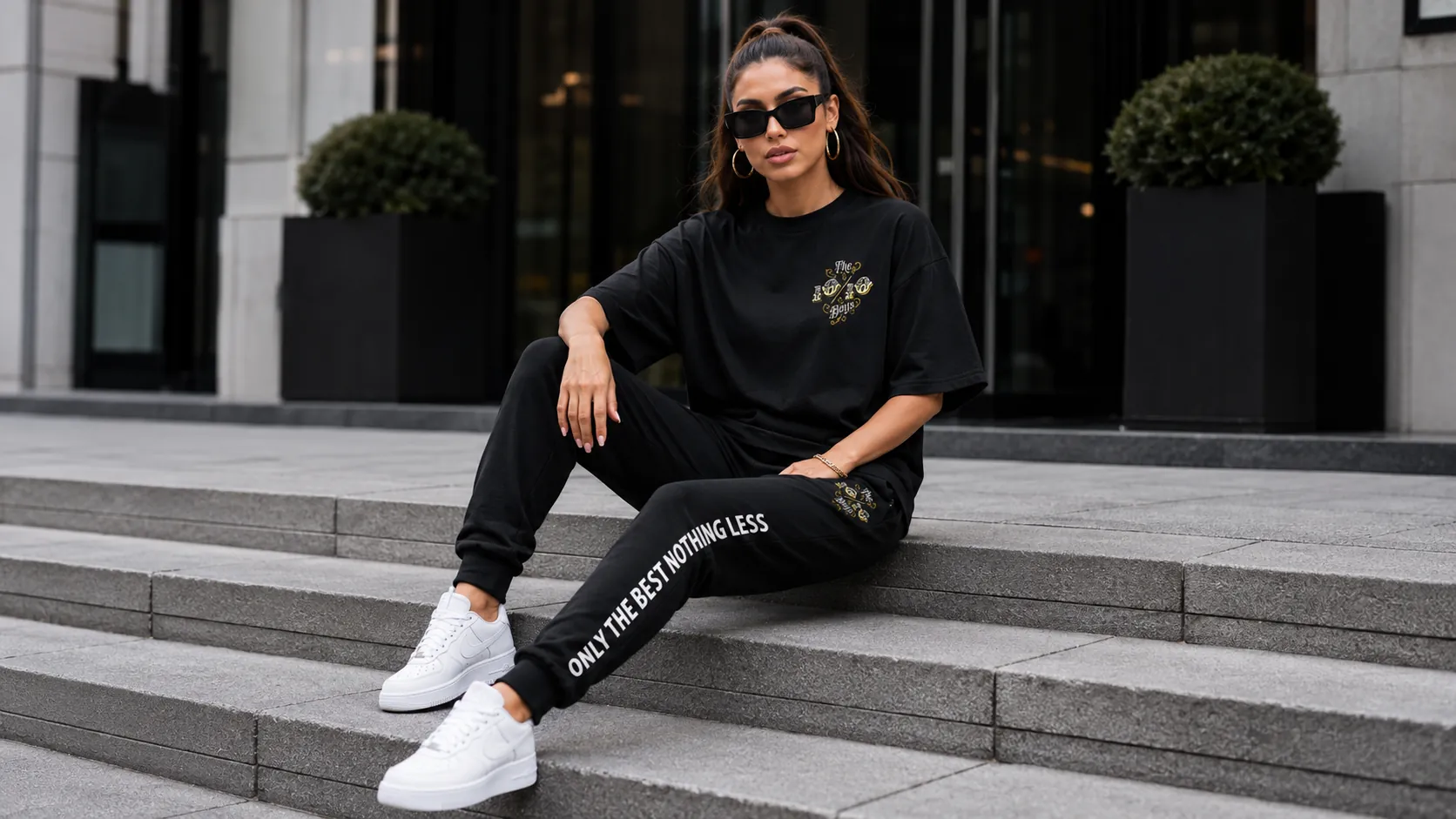
- Worn photography and official channels: images on a real body show drape that flat-lays cannot, and buying direct means you get the piece you researched.
FAQs About Black Streetwear
Why does black streetwear look premium?
Black removes colour contrast, so silhouette, texture, seams, proportion and graphics become the visible details. When those are well executed the piece reads as deliberate; when they are not, black makes the weaknesses more obvious rather than hiding them.
What makes a black T-shirt feel high quality?
A body with enough weight to hold its shape, a collar that recovers after being stretched, even dye across the garment, consistent stitching, and a cut where shoulder, sleeve and length were chosen on purpose.
Is heavyweight fabric always better for streetwear?
No. Heavier fabric gives more structure and holds a silhouette longer, which suits hoodies and statement tees, but it is warmer and less fluid. The right weight depends on how the piece is meant to be worn.
How can you stop black streetwear from fading?
Wash less often and at low temperatures, turn garments inside out, avoid bleach-based detergents, skip the tumble dryer where possible, and dry away from direct sun. Most visible fading comes from washing habits rather than wear.
How should black oversized streetwear fit?
The shoulder seam should fall where the design intends, usually below the natural shoulder, with a wider body that still has a defined line and a hem stopping at a deliberate point. A gaping neckline and unintentionally long sleeves mean the garment is simply too big.
Built on the Details
Black streetwear does not feel premium because it is black. It feels premium when fabric, fit, graphics and finishing have been considered as one piece of design rather than assembled separately. Once you know which details to look at, the difference stops being a matter of taste.